Kiro IDE: Setting a New Paradigm with Spec-Driven Development
Kiro IDE introduces Spec-Driven Development, an agentic AI workflow where EARS-formatted requirements become the single source of truth for design, implementation, and testing—improving alignment, accelerating onboarding, and reducing rework.
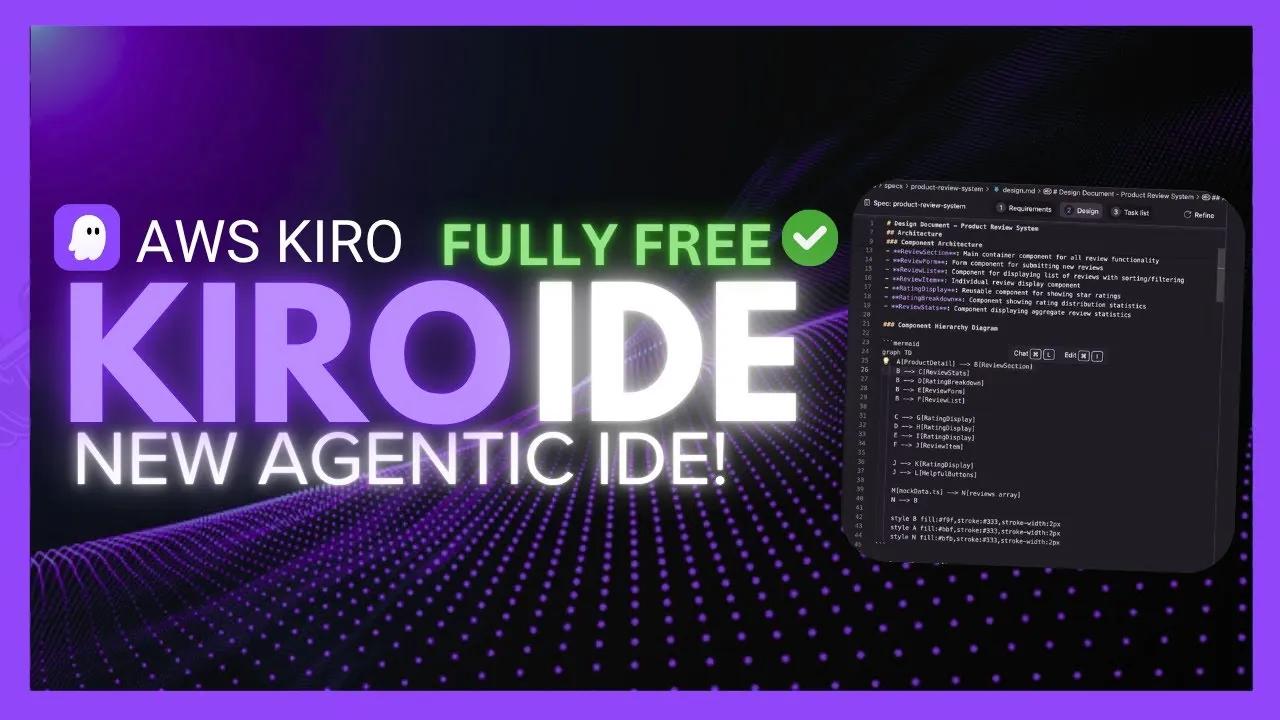
Introducing Kiro IDE
Kiro IDE is an agentic AI IDE that turns natural language prompts into structured, EARS-formatted requirements. From there, it automatically generates design diagrams, API specifications, and implementation task plans that stay tightly linked to requirements and tests.
By centering the entire engineering workflow on specifications, Kiro IDE enables a new approach: Spec-Driven Development.
What Is Spec-Driven Development?
Spec-Driven Development is a four-phase lifecycle where specifications are the primary artifact that drives planning, design, implementation, and validation:
- Establish Clear Requirements
Kiro converts prompts into precise, EARS-formatted requirements that are easy to review, negotiate, and approve.
- Produce Design Blueprints
From those requirements, Kiro generates design diagrams and API specifications, ensuring architecture and interfaces remain traceable back to the original intent.
- Break Specs into Implementation Units
Requirements are decomposed into implementation tasks, each connected to specific specs and associated tests.
- Construct with Human Oversight
Engineers implement with AI assistance while maintaining full human control, using the living specification as a guide and governance layer.
How Kiro IDE Works
- Prompt → EARS Requirements: Natural language input is transformed into structured, EARS-style requirements.
- Requirements → Design & APIs: Kiro generates design diagrams and API contracts that remain synchronized with the specs.
- Specs → Tasks & Tests: Implementation tasks are created with explicit links to requirements and test cases, enabling end-to-end traceability.
- Continuous Alignment: As the system evolves, the specification acts as a living document that keeps teams aligned.
Benefits in Enterprise Contexts
Organizations adopting Kiro IDE and Spec-Driven Development see:
- Improved alignment across teams: Product, engineering, and QA share a single, spec-centric source of truth.
- Accelerated onboarding: New team members ramp up faster by exploring the living specification, diagrams, and linked tasks.
- Higher success rates: Enterprises report success rates exceeding 85% when initiatives are driven from clear, traceable specs.
- Reduced rework: With requirements, design, implementation, and tests all connected, inconsistencies are caught earlier and corrected faster.
Kiro IDE turns specifications from static documents into an active, AI-powered backbone for the entire software lifecycle.
Why EARS Requirements Matter
By standardizing requirements in EARS format, Kiro IDE makes specifications unambiguous, reviewable, and directly actionable by AI agents. This structure is what enables reliable generation of design diagrams, API specs, and implementation tasks that remain aligned over time.
### Example EARS-Style Requirement

*Ubiquitous requirement*

The system shall generate an API specification for each approved feature requirement.

*Event-driven requirement*

When a new requirement is approved, the system shall create linked implementation tasks and associated test stubs.

*State-driven requirement*

While a requirement is in `In Review` state, the system shall prevent generation of production deployment tasks.