Every Review Layer Multiplies Latency: How Teams Get Slower and How to Recover
Engineering teams often optimize for faster coding while ignoring the real bottleneck: review queues, approvals, and handoffs. Each added review layer can multiply wall-clock latency, neutralizing gains from AI and better tools. This post explains why that happens and how to recover using quality-by-construction and trust-based systems.
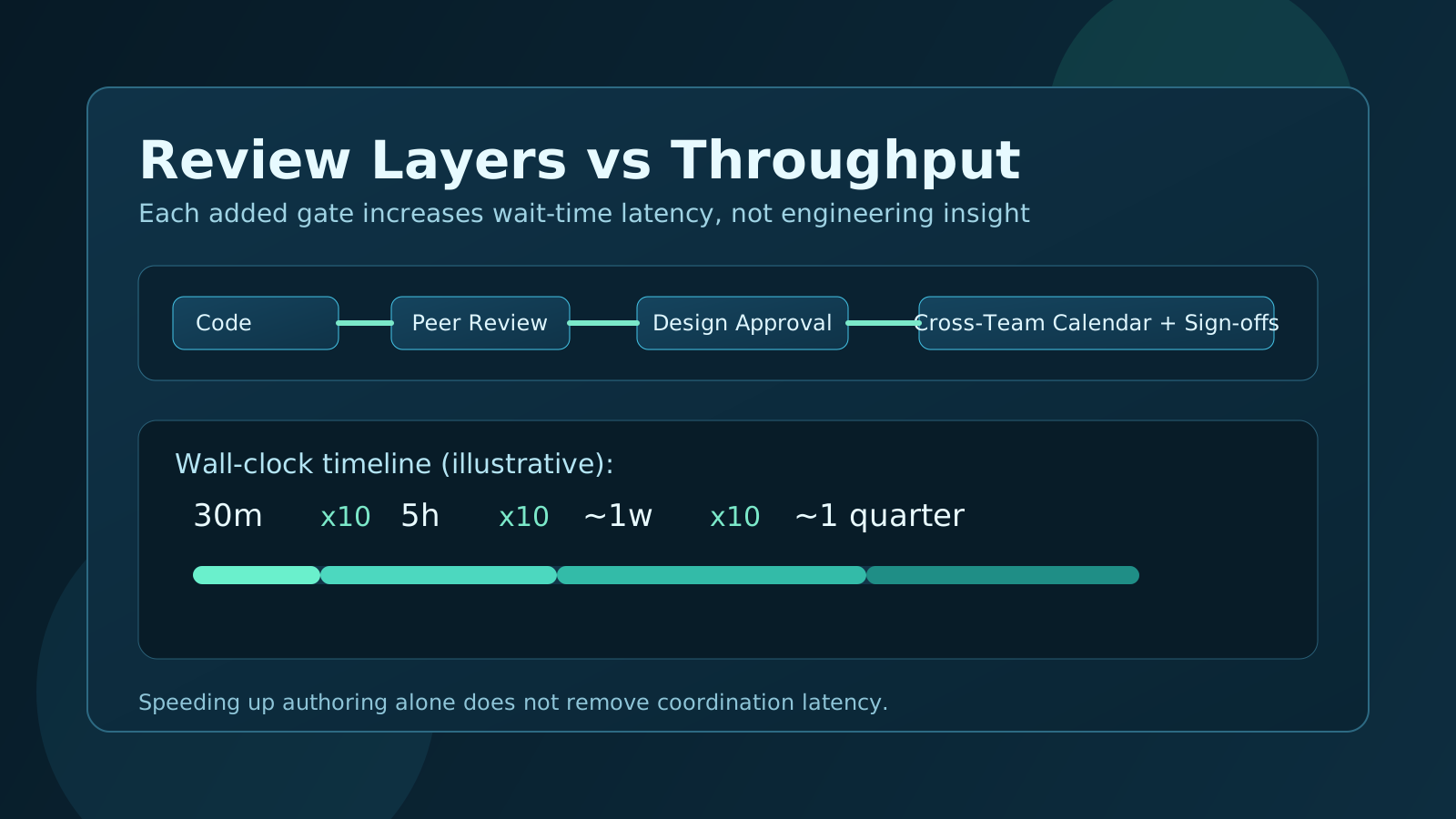
Most engineering orgs obsess over coding speed—better IDEs, faster CI, more powerful AI models. Yet when you look at wall-clock delivery time, the real drag is almost always elsewhere: review queues, approvals, and handoffs.
The Core Problem: Latency Multiplies
Each additional approval layer doesn’t just add a bit of time; it can multiply end-to-end latency.
Why? Because every review step introduces:
- Queueing delay – Work waits in someone’s inbox or board column.
- Scheduling misalignment – Reviewer and author are rarely free at the same time.
- Asynchronous feedback cycles – Each round of comments creates another delay.
If a single review step typically adds a day of waiting, two or three stacked steps can easily stretch a change from hours to weeks. The more layers you add, the more likely work is to stall in limbo.